

Mulligans
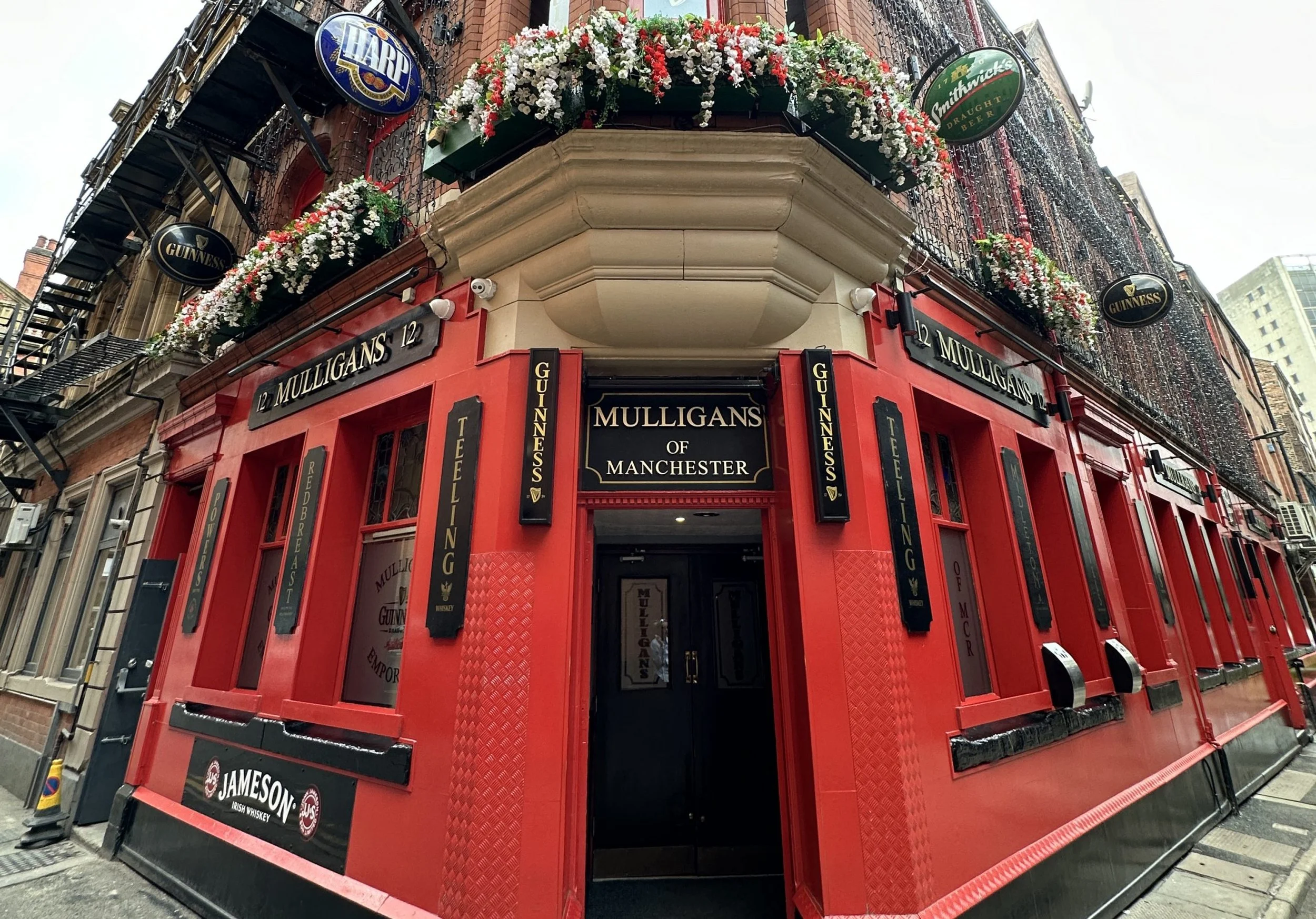
Mulligans research was for a more limited area focussed on a single building. The brief included taking in the story of immediate area, 100 metres or so around the site. Of course the area taken in is entirely up to the client.
Mulligans is Manchester’s most famous and most popular Irish bar but it began life as the Waggon and Horses pub. This part of the city centre initially developed as an affluent area of grand eighteenth century town houses but as the city expanded fell from grace into a notorious area of brothels and heavy drinking with markets adjacent to the pub such as the attractively named ‘Pork and Carcase Market’. A near neighbour was Mr Jordan, a ‘surgeon’ aka doctor. He set up the first provincial School of Anatomy in 1814 on Bridge Street. He had a reputation as being a customer for ‘resurrectionists’ or body-snatchers.
If you like your history gritty then this is gritty and then some. There are also lots of light moments with countless jolly entertainments in the pub and marriages celebrated.
What we were able to establish was the correct years when the pub opened in the 1820s and the exact date, 7 June, 1990 when it became Mulligans. These had previously been quoted wrongly.
The research, which included maps and images, ran to 3,000 words.
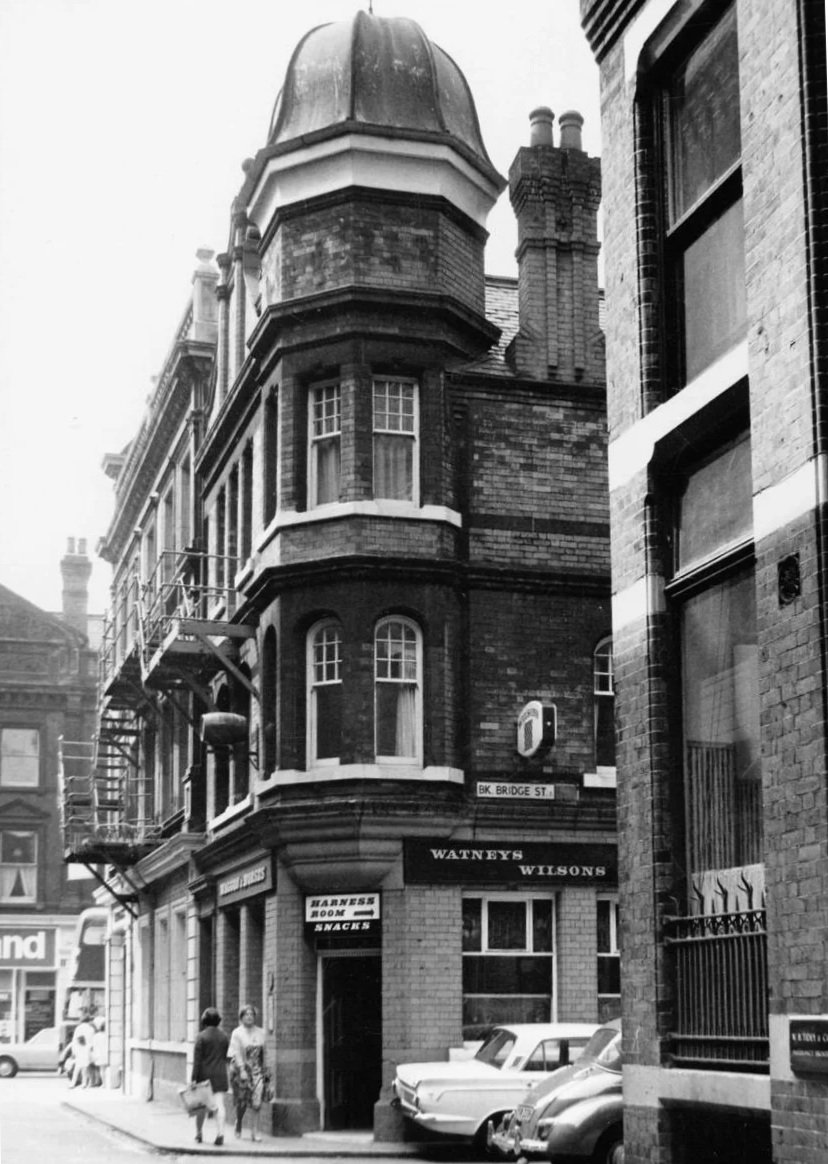
The Waggon and Horses, 1970
Today known as Mulligans, the pub spent much of its history as the Waggon and Horses. This photograph from 1970 captures the building twenty years before it reopened under the Mulligans name, providing a recognisable link between the pub people know today and its much longer history.
Historic photographs such as this help us trace not only changes to a building, but also changes in ownership, identity and clientele. When combined with maps, newspaper reports and contemporary pub guides, they allow the story of a familiar place to be reconstructed across several generations.
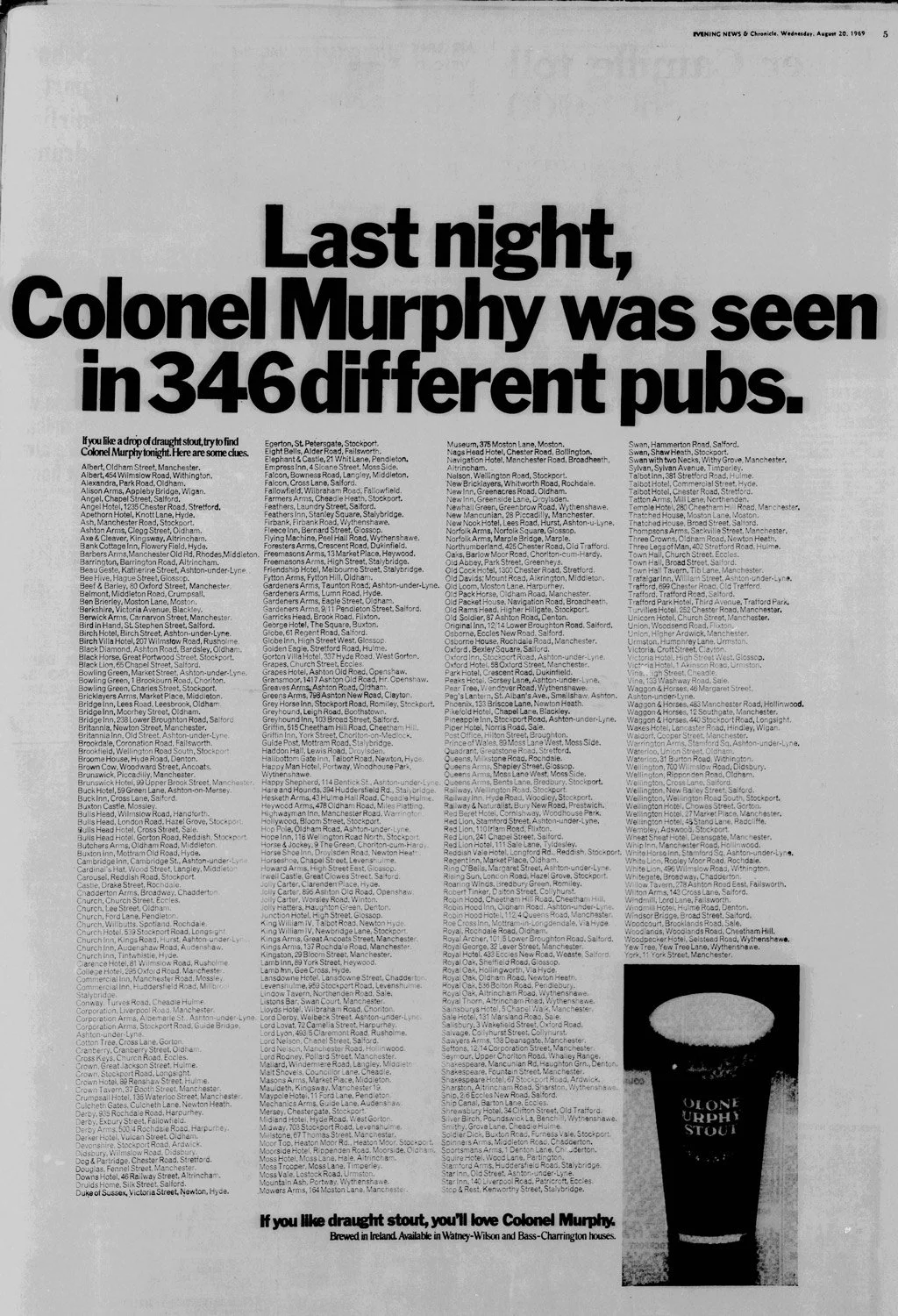
Colonel Murphy in 346 pubs
This wonderfully bold 1969 advertisement announced that “Colonel Murphy” had been seen in 346 different pubs—a playful way of promoting the many establishments then serving Murphy’s stout. Among the lengthy list was Manchester’s Waggon and Horses.
Newspaper advertisements can reveal details that might otherwise have disappeared: what was being served, how the pub was marketed and the audience it hoped to attract. Alongside reports of meetings, entertainment, employment and everyday incidents, they gradually build up a much richer picture of the pub’s place in Manchester life.
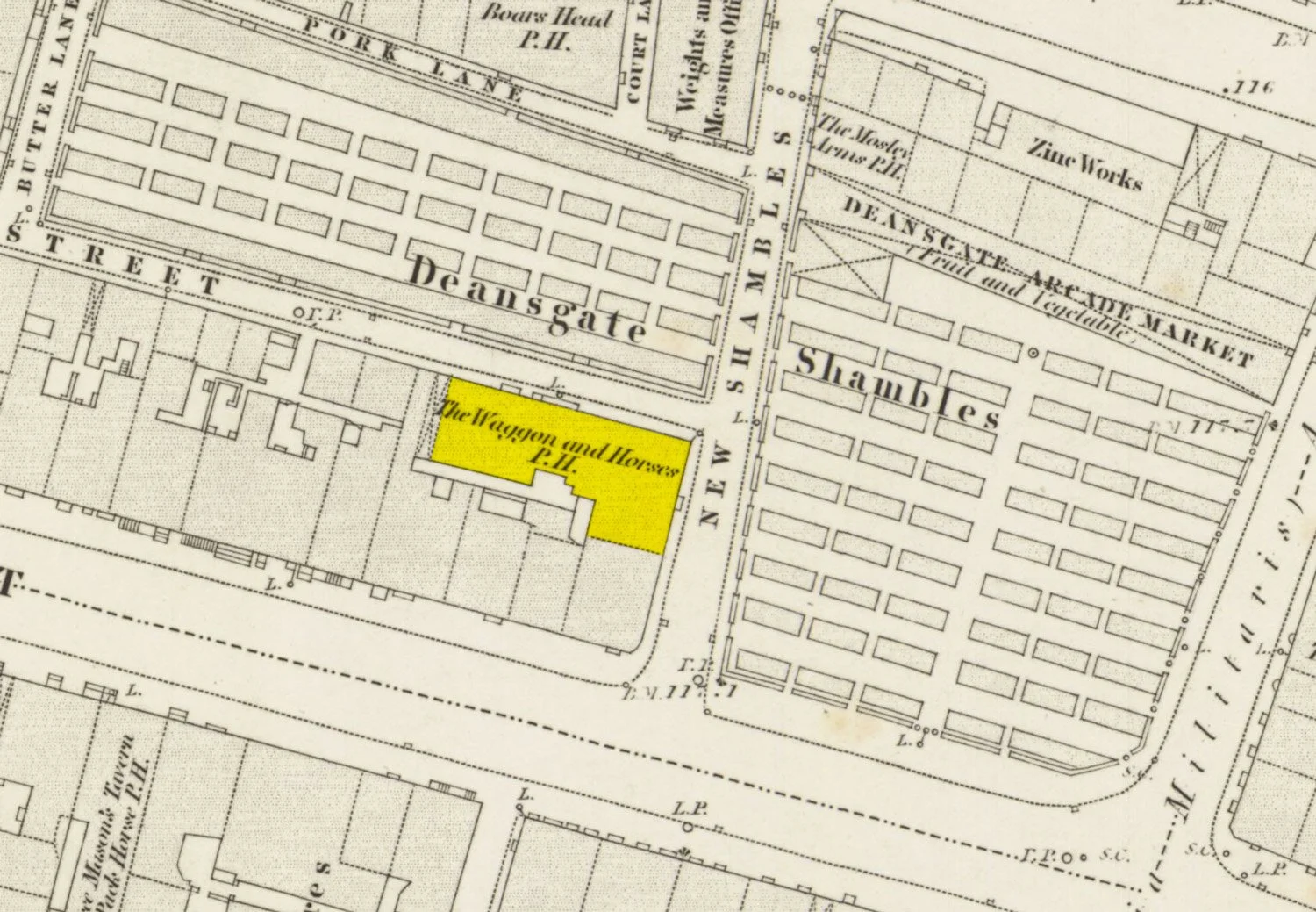
The Waggon and Horses in 1849
This 1849 map places the Waggon and Horses within the dense network of streets immediately west of Deansgate. The pub stood beside the Deansgate Shambles, where the city’s butchers, meat stalls and market activity would have created a busy—and probably rather chaotic—environment.
It was also close to the Arcade and the commercial streets around King Street and Bridge Street. Researching the wider neighbourhood helps us move beyond the history of the building alone, revealing the markets, businesses, institutions and communities that would have shaped the pub and the people who used it.